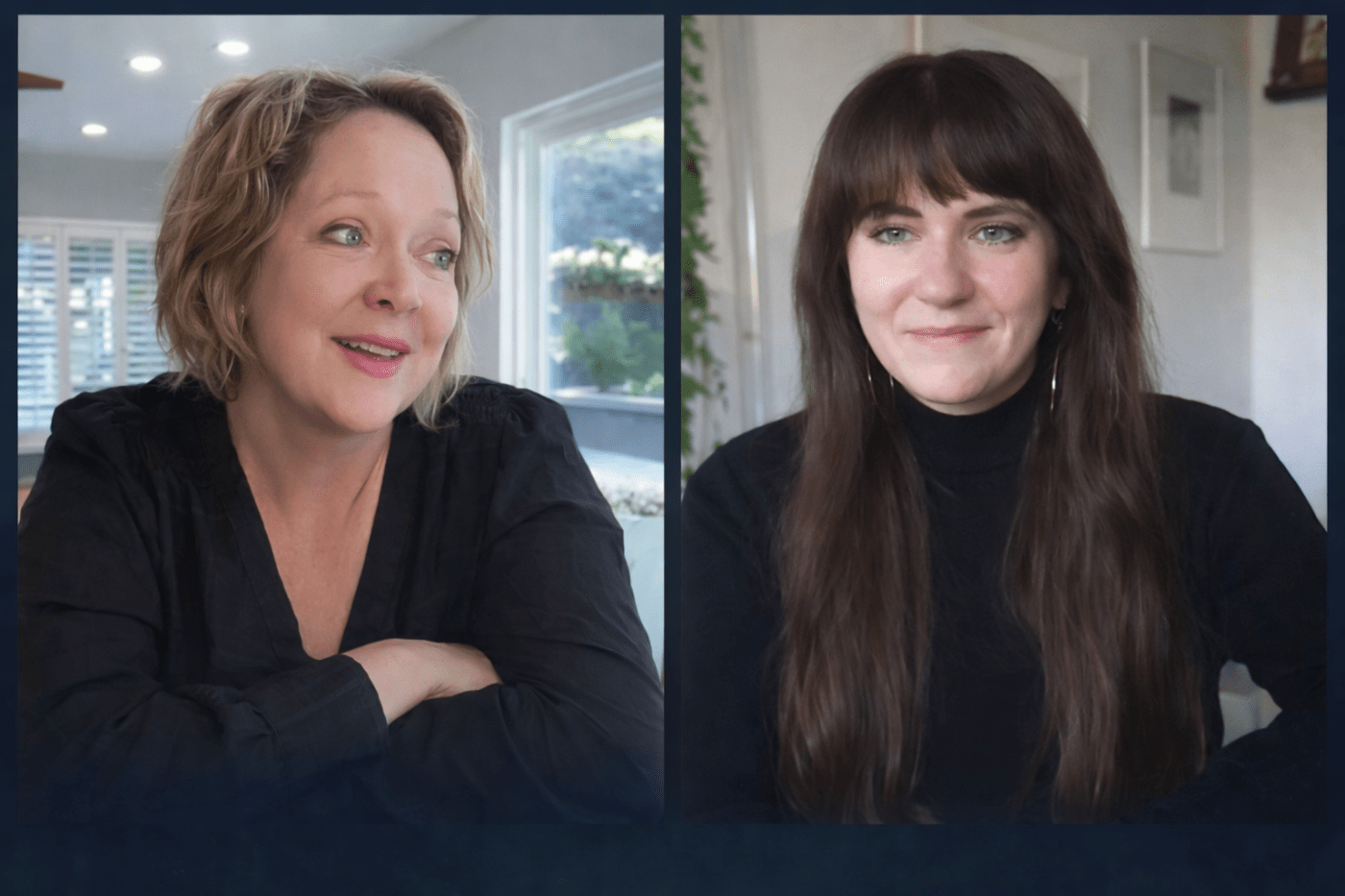
I’m honored to have been interviewed on A Happy Cancer Podcast. You can watch on Spotify or listen on Apple Podcasts. Links at bottom. Here’s a snippet:
This podcast show is an uplifting look at life during and after cancer — the laughter, the loss, the lessons, and the moments that make it all worth living. Hosted by Kellie Whitton, former Warner Bros. Marketing Executive and founder of http://www.carakit.com, the show shares honest conversations with survivors, caregivers, and medical experts who are redefining what it means to live with cancer. Together, they explore resilience, connection, and the ways joy can show up even in the hardest times. Because happiness doesn’t mean ignoring the hard parts — it means finding light within them.
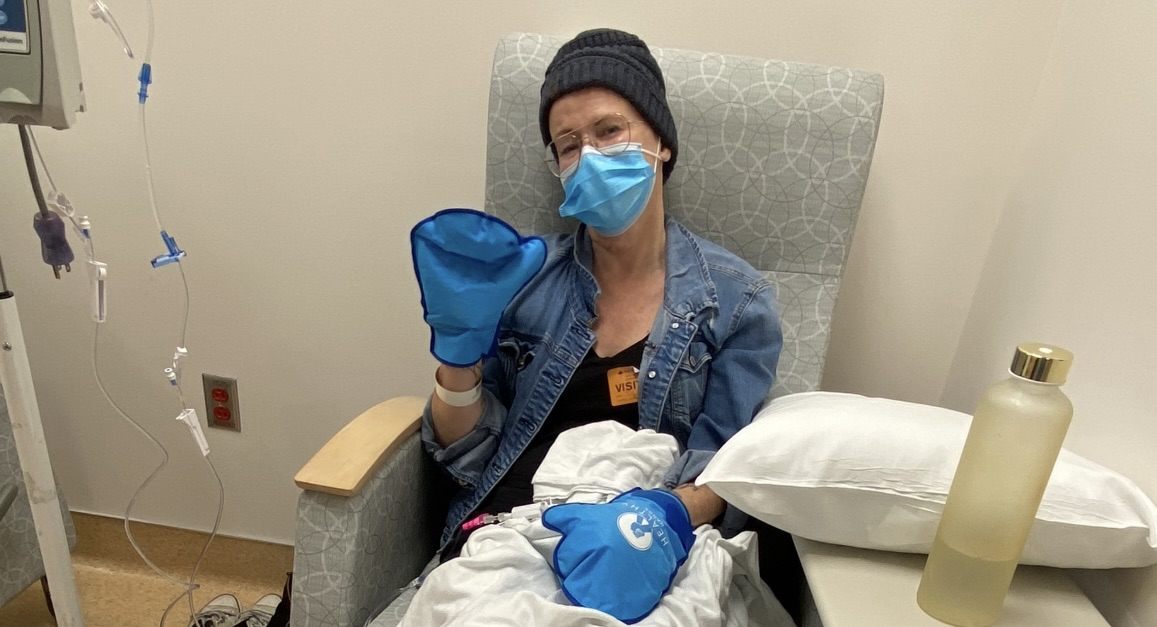
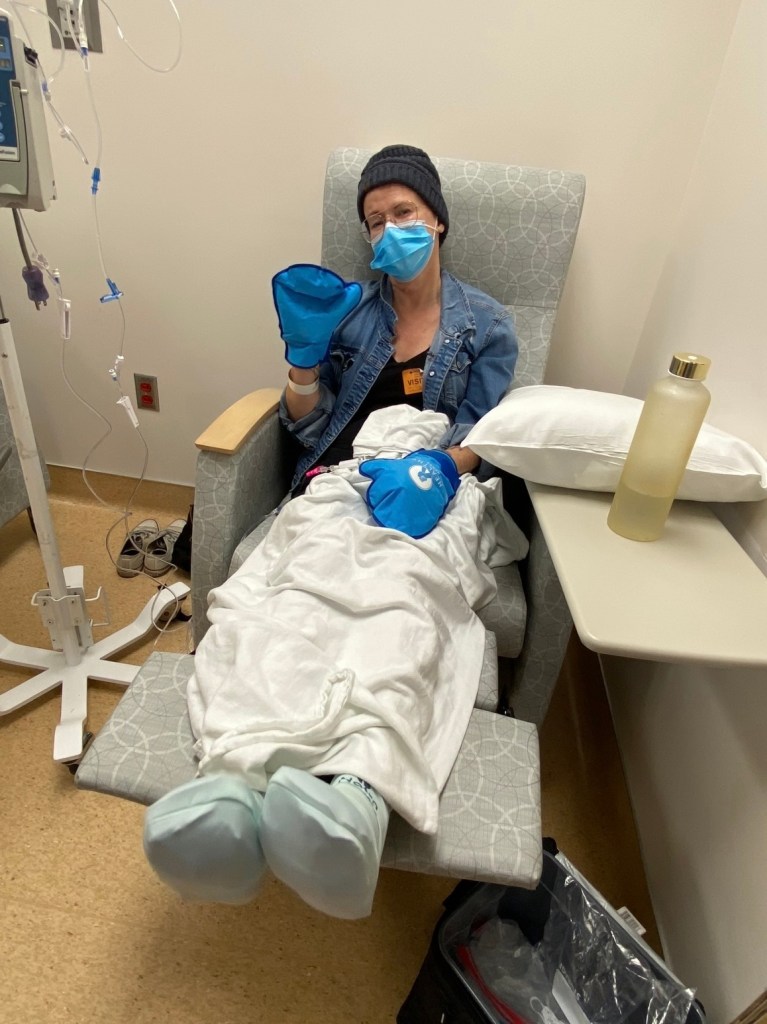
Recently, I came across this photo, at the bottom of this post—from four years ago, when I was going through cancer treatment. When I see pictures from that time, I’m thrown back into the moments: the fear, confusion, exhaustion. And resilience. And—surprisingly—some good feelings. Yes, there are good moments during cancer treatment.
This photo made me think of my infusion mate. The Jazz Singer.
I met her at the hospital infusion center. Not the jazz bar you’d imagine—low lights, hushed conversations, martinis. No. This was a literal infusion center, where people go to receive chemotherapy to fight cancer.
The room was bright. Too bright. Uncomfortable, almost claustrophobic. No windows. A temporary infusion space at the hospital in Santa Monica, more like a blood-donation room than anything designed for long hours tethered to IVs. The hospital was building a new infusion center—larger, more comfortable, like a living room—but for those of us unlucky enough to get cancer before it opened, this was where we landed.
I had just started my first round of a chemo cocktail made just for me—not shaken, not stirred, but a dastardly mix of drugs and poisons. I was scared. Humbled. Still trying to understand how I had arrived at breast cancer at all.
Because it was still the pandemic, I was alone. No guests allowed. No hand-holding. Just me, an IV line, and friendly nurses dressed in what looked like hazmat suits, administering drugs so toxic they had to protect themselves from it.
And then she walked in.
I knew immediately my friend had arrived—though we’d never met. She looked like a jazz singer in every possible way. Elegant. Regal. Dressed entirely in black, wearing a gorgeous turban with a large sparkling brooch on it—a covering she didn’t need, since she still had her long, beautiful black hair. She carried herself like she was arriving for her live stage show.
I’m a musician and singer myself, but there I was in Converse, sweats, a jean jacket, not knowing what to expect. I was in awe of her. I showed up for anything. She showed up for everything. Thankfully, our infusion Lazy-Boy–type chairs were next to each other.
Now, understand this: people aren’t there to socialize in an infusion center. They’re there to survive. To get in, get dosed, get out. People read books, listen to music, watch movies, sleep.
My jazz friend was given Benadryl to prevent any treatment-triggered allergic reactions. She was there for breast cancer too—different than mine. There are five to six different types of breast cancer, and we had two of them. And she had twenty-five years on me. Late seventies. Grown children. And one son who was about to get married.
She said she was going to fight this fucking cancer as long as she could, just to see her son walk down the aisle. And she was going to do it her way. So she showed up in her purest form. A jazz singer.
And yes, she dropped the f-bomb. Multiple times. In an infusion center, you’re allowed to say just about anything. She was elegant—but also a musician’s musician.
Once we started talking—out of curiosity, maybe loneliness, maybe fate—we never stopped. Even though the Benadryl would make her fade in and out. We exchanged first names, then phone numbers. Soon we were texting late at night, checking in on each other. Talking about life. Agonizing over cancer. Celebrating our children and how much we love them. At the time, my son was 18 and had just graduated high school. Of course I was fighting for him, but also for me. There was no wedding on the horizon for him—just life—and I hoped to be a part of it.
But what the Jazz Singer and I really shared was music.
She told me stories of her life as a jazz singer—of experience and exploration and artistry. She celebrated me as a rock-and-roll singer, though I felt my stories paled in comparison. What struck me most, though, was her love of life. Her devotion to her children. Her husband was hospitalized and unconscious from a stroke and Alzheimer’s—she was staying alive for him, too. Even though he didn’t know what she was going through, she knew what he was going through, and she wanted to be there for him.
I was stunned. Here was a woman with incurable cancer, enduring harsh treatments simply to remain present for the people she loved. And this is not unusual for many people going through cancer treatments. They don’t do it to cure; they do it for one more year, one more month, one more day.
We shared the same oncologist, and we talked about our doctor—about her compassion, about how she treated two different patients, with two completely different stories, under the same terrifying umbrella of cancer.
As months passed, my infusions ended. I received the words every cancer patient longs to hear: full response. The tumor was no longer visible on scans. The chemo worked. I moved on to surgery and radiation.
My Jazz Singer stayed at the infusion center for her weekly sessions. And our nightly texts continued. Until one final message told me she wouldn’t be texting anymore.
Not because the cancer won. Not because the treatments failed. They didn’t—she made it to her son’s wedding. Mission accomplished. But because, it was time.
She had time to tell me she loved me. And I had time to tell her I loved her.
Fate sits you next to people sometimes—on buses, planes, jobs. Fate sat me next to the Jazz Singer. Or maybe she was sat next to me.
Looking back, during my final infusions—months in for both of us—she continued to show up impeccably put together: black scarves, flawless makeup, elegance radiating from her. By then, she had lost her hair. I had too. I wore a beanie. Still in my Chucks.
I always iced my hands and feet during chemo, and one time she asked why. I told her I wanted to keep chemo-induced neuropathy away, to keep my fingers healthy for guitar playing and book writing—and keep my feet pain-free so I could wear smoking-hot high heels again someday.
 Laurie Markvart's Diary